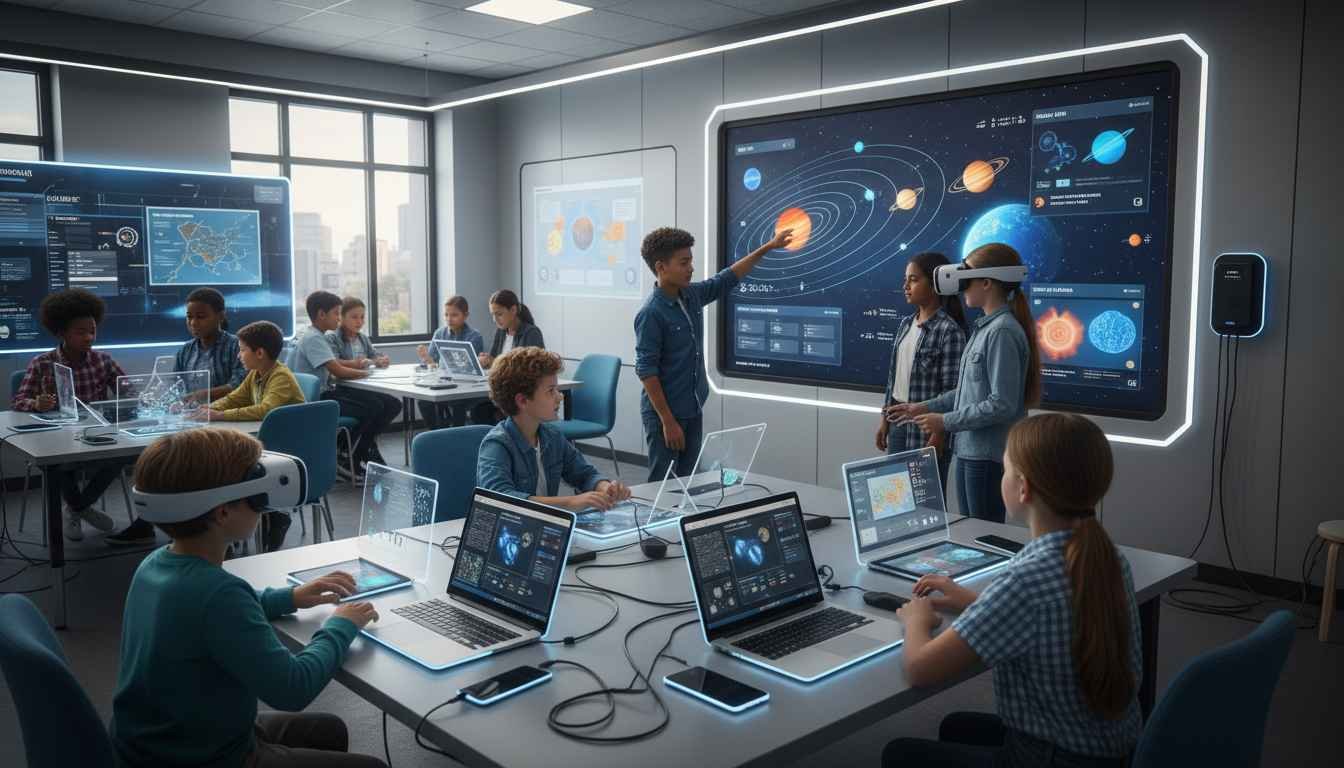
Imagine a classroom where every lesson feels like an adventure, where learning isn’t just a task but an experience that captivates your senses and ignites your curiosity. This isn’t a distant dream – it’s the reality crafted by innovative educational tech companies that are revolutionizing the way we learn. Through the integration of interactive features, these platforms are not only making learning more engaging but are also significantly enhancing knowledge retention. In a world where information overload is the norm, retaining what you learn has become more challenging than ever. Yet, these platforms are turning the tide by making learning stick.
The Power of Interactive Learning
Traditional education often relies on passive learning methods – listening to lectures, reading textbooks, and memorizing facts. While these methods have their place, they can lead to disengagement and poor retention. Interactive learning flips this model on its head. By actively involving learners in the process, it transforms them from passive recipients to active participants. Features like quizzes, simulations, and interactive videos compel learners to apply what they’ve learned, reinforcing knowledge through practice. This active engagement not only makes learning more enjoyable but also helps solidify information in long-term memory. For instance, platforms like Codecademy have demonstrated that learners who engage with interactive coding exercises retain programming concepts more effectively than those who study passively. The hands-on approach allows learners to experiment, make mistakes, and learn from them in real-time, fostering a deeper understanding of the material.
Gamification: Learning Through Play
Who said learning can’t be fun? Gamification introduces elements of play into the learning process, making it more engaging and motivating. By incorporating points, badges, leaderboards, and challenges, educational tech companies create a learning environment that feels more like a game than a chore. This approach taps into the brain’s reward system, releasing dopamine when learners achieve milestones, which reinforces positive behavior and encourages continued engagement. For example, platforms like Struggly have gamified math learning by turning problem-solving into interactive puzzles. Students earn rewards for persistence and creativity, transforming the learning experience into an exciting journey. This not only makes learning more enjoyable but also enhances retention by associating positive emotions with the learning process.
Adaptive Learning: Tailoring Education to Individual Needs
One-size-fits-all approaches to education often fail to meet the diverse needs of learners. Adaptive learning addresses this challenge by personalizing the learning experience. Using data analytics and artificial intelligence, these platforms assess a learner’s strengths and weaknesses, adjusting the content and pace accordingly. This ensures that learners are neither bored with material that’s too easy nor overwhelmed by content that’s too difficult. Platforms like OttoLearn exemplify this approach by delivering microlearning modules that adapt to the learner’s progress, ensuring optimal challenge levels and promoting better retention. By providing personalized learning paths, adaptive platforms keep learners engaged and help them master concepts at their own pace, leading to more effective learning outcomes.
Immersive Technologies: Bringing Learning to Life
Virtual reality (VR) and augmented reality (AR) are no longer just buzzwords; they’re powerful tools in education. These immersive technologies create realistic simulations that allow learners to experience concepts firsthand. Whether it’s exploring the human circulatory system in 3D or walking through ancient Rome, VR and AR make abstract concepts tangible and memorable. Educational tech companies are integrating these technologies into their platforms to provide immersive learning experiences that enhance understanding and retention. For instance, platforms like Discovery Education have utilized VR to create interactive science lessons that engage students in hands-on learning. By immersing learners in realistic scenarios, these technologies make learning more engaging and help solidify knowledge by providing experiential learning opportunities.
Collaborative Learning: Building Knowledge Together
Learning doesn’t have to be a solitary activity. Collaborative learning encourages interaction among peers, fostering a community of learners who can share ideas, solve problems together, and support each other’s growth. Online platforms facilitate this by incorporating features like discussion forums, group projects, and peer assessments. This social aspect of learning not only makes it more engaging but also enhances retention by allowing learners to discuss and apply concepts in different contexts. Platforms like LearnWorlds have built-in social learning tools that enable learners to collaborate and learn from each other, creating a dynamic and interactive learning environment. By promoting collaboration, these platforms help learners deepen their understanding and retain information more effectively.
Instant Feedback: Learning from Mistakes
Feedback is a crucial component of the learning process. Immediate feedback helps learners understand what they’ve mastered and where they need improvement. Interactive platforms provide instant feedback through quizzes, assessments, and interactive exercises, allowing learners to identify and correct mistakes in real-time. This timely intervention prevents misconceptions from taking root and reinforces correct understanding. For example, platforms like Struggly offer puzzles that provide immediate feedback, encouraging learners to persist and learn from their errors. By receiving prompt feedback, learners can adjust their strategies and improve their performance, leading to better retention and mastery of the material.
Analytics and Progress Tracking: Staying on Course
Knowing where you stand in your learning journey is vital for motivation and improvement. Many online learning platforms offer analytics and progress tracking tools that provide learners with insights into their performance. These tools highlight strengths, identify areas for improvement, and set goals for future learning. By visualizing progress, learners can stay motivated and focused on their objectives. Platforms like Skilljar offer detailed analytics that help learners monitor their progress and stay on track. These insights not only help learners identify areas for improvement but also celebrate achievements, reinforcing positive learning behaviors and enhancing retention.
Accessibility: Learning Anytime, Anywhere
In today’s fast-paced world, flexibility is key. Online learning platforms provide access to educational content anytime and anywhere, allowing learners to study at their own pace and on their own schedule. This accessibility removes barriers to learning, enabling individuals from diverse backgrounds and locations to pursue education. Whether it’s a busy professional looking to upskill or a student in a remote area, online platforms make learning possible. Platforms like Teachable offer mobile-friendly interfaces that allow learners to access courses on the go, ensuring that learning fits into their lifestyle. By providing flexible learning options, these platforms cater to the needs of modern learners and promote continuous education.
The Future of Learning: A Call to Action
The landscape of education is rapidly evolving, and interactive online learning platforms are at the forefront of this transformation. By incorporating features that engage learners, personalize experiences, and provide immersive learning opportunities, these platforms are not only enhancing knowledge retention but are also making learning more accessible and enjoyable. As we look to the future, it’s clear that the integration of technology in education will continue to play a pivotal role in shaping how we learn. Don’t miss out on the opportunity to be part of this educational revolution. Explore the interactive features offered by leading online learning platforms and embark on a learning journey that is as engaging as it is effective. The future of learning is here – are you ready to embrace it?
If you are interested in how modern education approaches are fostering teamwork, exploring the role of full inclusion education can provide valuable insights into online learning platforms.
If you explore the diverse offerings of online learning platforms, you’ll find that they provide invaluable health education services that cater to various skill development needs.
If you explore the transformative power of online learning, you’ll discover how indoor physical education fosters a collaborative environment that enhances peer-to-peer mentorship and learning experiences.